
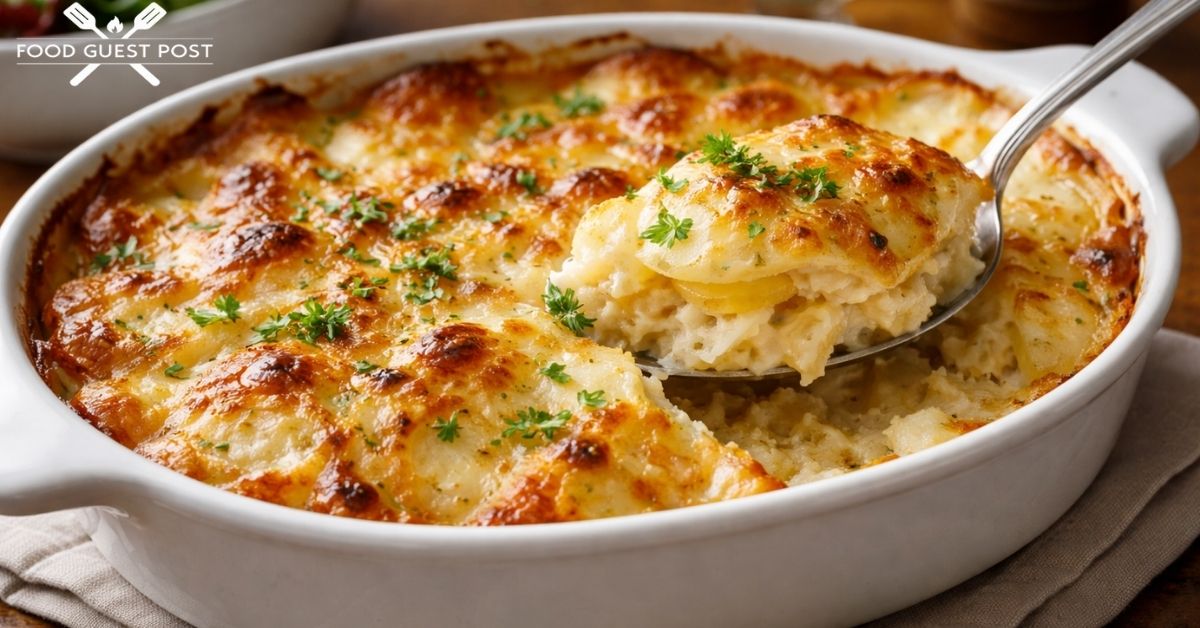
Have you ever made a side dish so good that it completely stole the show? That’s exactly what happens with Mary Berry Dauphinoise Potatoes. This classic French-inspired recipe is rich, creamy, and deeply satisfying. Whether you’re cooking for a Sunday roast or a dinner party, this dish always delivers. It feels fancy but it’s surprisingly simple to pull off at home.
Mary Berry has a gift for making elevated cooking feel approachable. Her version of dauphinoise potatoes layers thinly sliced potatoes in seasoned cream, then bakes them until golden and bubbling. The result is melt-in-your-mouth comfort food at its finest. Once you try it, plain roast potatoes will never feel quite enough again.
What are Mary Berry Dauphinoise Potatoes?
Dauphinoise potatoes originate from the Dauphiné region of France. The dish is essentially thinly sliced potatoes baked low and slow in cream and garlic. Mary Berry’s version keeps things classic and fuss-free. It’s not overly complicated. No fancy techniques required. Just honest, beautiful ingredients doing their job well.
What makes Mary Berry’s take special is the balance. She uses double cream for richness but doesn’t go overboard. The garlic infuses gently into every layer. The potatoes soak up all that creamy goodness as they bake. The top layer turns beautifully golden. It’s comfort food with a touch of elegance.
Why This Recipe is Worth Trying
This dish is a genuine crowd-pleaser. It suits casual weeknight dinners just as easily as it suits Christmas tables. People always ask for seconds. Sometimes thirds. That says everything. You don’t need to be an experienced cook to nail this recipe on your first attempt.
Mary Berry’s recipe is tried, tested, and trusted by thousands of home cooks. It works consistently because the method is straightforward and the ingredients are reliable. Once you understand the basics, you’ll find yourself making it on repeat. It’s one of those recipes that earns permanent space in your cooking rotation.
Read More: Easy Mary Berry Tuscan Chicken Recipe
Essential Ingredients to Make Mary Berry Dauphinoise Potatoes
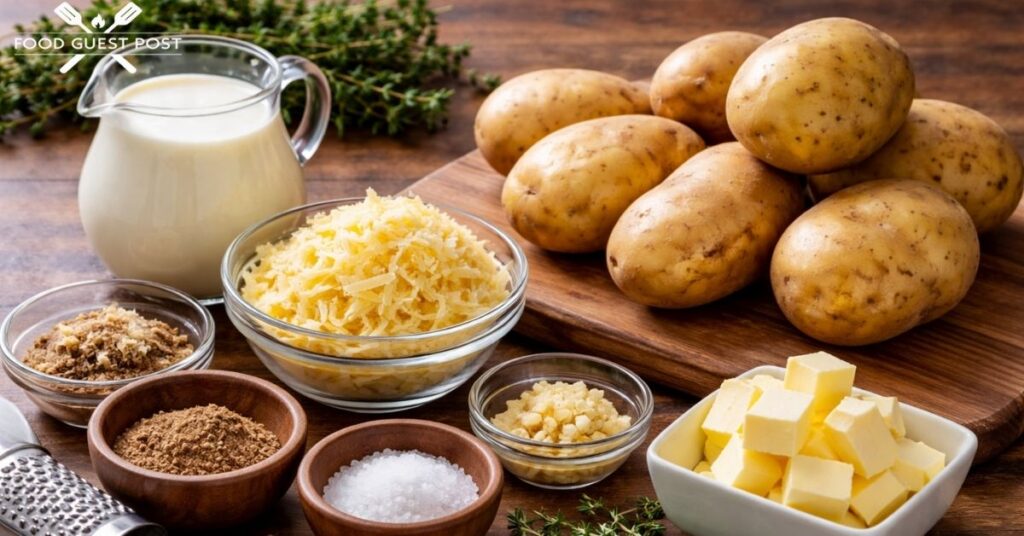
You only need a handful of ingredients. That’s the beauty of this dish. Use floury potatoes like Maris Piper or King Edward. They hold their shape during baking while absorbing the cream perfectly. Double cream is non-negotiable for that signature richness. Don’t swap it for single cream. The texture won’t be the same.
You’ll also need garlic, butter, salt, black pepper, and optional nutmeg. The nutmeg adds a subtle warmth that elevates the whole dish. Fresh garlic works best here. Some versions add gruyère cheese on top for a golden crust. Mary Berry sometimes includes it. It adds a lovely savoury depth worth trying.
Handy Kitchen Tools for Best Results
A sharp mandoline slicer is your best friend here. Uniform potato slices ensure even cooking throughout. If slices are uneven, some parts cook too fast while others stay firm. A good mandoline removes that risk entirely. Use the guard. Always. Sharp blades are no joke in the kitchen.
You’ll also need a shallow oven-safe baking dish. Something around 20x30cm works well for four to six servings. A heavy-bottomed saucepan is helpful for warming the cream mixture before pouring. Aluminium foil is useful too. Covering the dish early in baking traps steam and helps the potatoes cook through properly.
Step-by-Step Guide to Making Mary Berry Dauphinoise Potatoes
- Slice the potatoes – Peel 1kg of potatoes and cut them into thin, even slices so they cook evenly.
- Simmer with the cream mixture – Warm 300ml cream, 200ml milk, 2 crushed garlic cloves, salt, pepper, and nutmeg in a saucepan. Add the sliced potatoes and simmer for 5–7 minutes until they begin to soften.
- Butter the baking dish – Grease the dish with butter to stop sticking and add extra flavour.
- Arrange the potatoes – Place the potatoes in the baking dish and spread them evenly, keeping the slices slightly overlapping in layers.
- Add the remaining liquid – Pour any leftover cream mixture from the pan over the potatoes to keep the dish moist and well balanced.
- Bake until done – Bake at 160°C (320°F) for 45–55 minutes until the top turns lightly golden and the potatoes are tender when pierced.
- Let it rest before serving – Leave the dish for about 5 minutes so the creamy sauce thickens naturally.
What I Got Wrong (And How I Fixed It)
The first time making this dish, the potatoes came out undercooked in the centre. The top looked perfect but the middle was still firm. The mistake was cutting the potatoes too thick. Thick slices don’t cook through evenly, no matter how long you bake them. Thin slices, around 3mm, are essential.
Another common mistake is skipping the foil during the first stage of baking. Without it, the top browns too quickly while the inside stays raw. Covering the dish locks in moisture and steam. That steam is what cooks the potatoes through. Removing the foil only at the end gives you the perfect golden finish without sacrificing the interior.
Healthier Version of Mary Berry Dauphinoise Potatoes
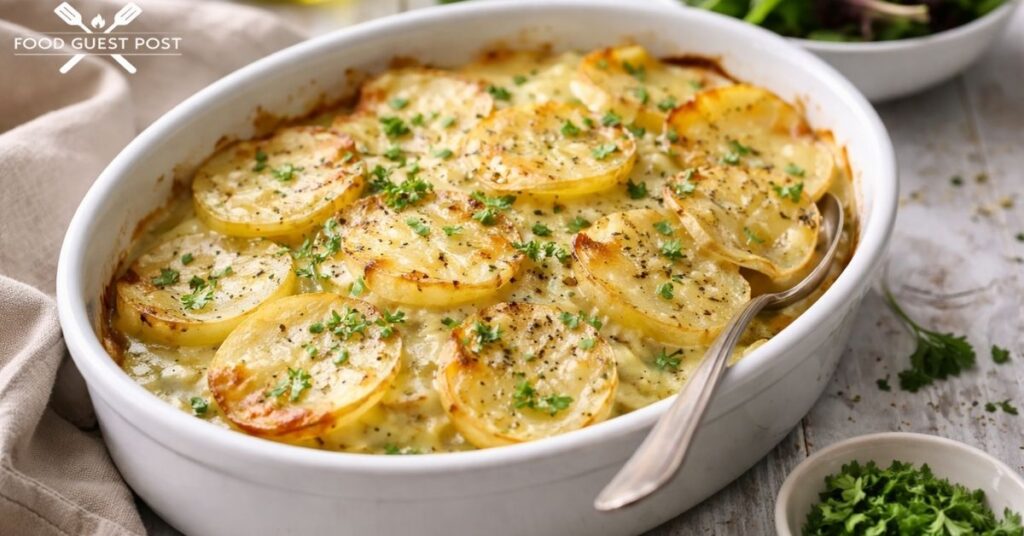
Want a lighter take without losing all the comfort? Swap double cream for a mix of half cream and half semi-skimmed milk. The dish will be slightly less rich but still deeply satisfying. Reducing the butter helps too. You won’t notice a dramatic difference in flavour, but you’ll cut the calorie count meaningfully.
Using sweet potatoes instead of regular ones adds nutritional value. Sweet potatoes bring beta-carotene and a gentle natural sweetness. They pair beautifully with the garlic and cream. Skip the cheese topping or use a reduced-fat version. These small tweaks make the dish more balanced without stripping away what makes it special.
Ingredient Substitutions for Mary Berry Dauphinoise Potatoes
No double cream? Use crème fraîche blended with a little whole milk. It gives a slightly tangy note that works surprisingly well. Vegan? Substitute cream with full-fat coconut cream or a good quality oat cream. Use plant-based butter too. The texture changes slightly but the dish remains indulgent and satisfying.
Can’t find Maris Piper potatoes? Yukon Gold varieties work as a solid alternative. They have a similar starchy, creamy quality. For the cheese, gruyère can be swapped for cheddar or comté. Both melt well and bring great flavour. Garlic powder can replace fresh garlic in a pinch, though fresh always gives a superior result.
Pairing Ideas: What to Serve With Mary Berry Dauphinoise Potatoes
This dish pairs beautifully with slow-roasted lamb. The richness of the potatoes complements the deep savoury flavour of lamb perfectly. It also works wonderfully alongside roast chicken or beef tenderloin. The creaminess cuts through strong meat flavours in a way that feels effortlessly balanced and complete.
For a lighter pairing, serve alongside a crisp green salad dressed with lemon vinaigrette. The acidity cuts through the cream beautifully. Steamed green beans or tenderstem broccoli also work well. They add colour and freshness to the plate. This dish is versatile enough to anchor an entire meal without overshadowing anything around it.
Expert Tips to Make Perfect Mary Berry Dauphinoise Potatoes
Always warm your cream before adding it to the dish. Cold cream straight from the fridge can cause uneven cooking. Warming it with garlic also allows the flavour to infuse more deeply. This one small step makes a noticeable difference in the final result. Don’t rush this part.
Season every layer individually. Not just the cream, but each potato layer. Under-seasoned dauphinoise tastes flat and disappointing regardless of how good the technique is. Taste as you go. Also, resist the urge to slice potatoes too far in advance. They oxidise and discolour. Slice just before assembling for the best results.
Creative Ways to Customize Mary Berry Dauphinoise Potatoes
Add thinly sliced leeks between the potato layers for a subtle sweetness. Caramelised onions work beautifully too. They add depth and a gentle sweetness that pairs wonderfully with the cream. Even a handful of fresh thyme leaves scattered between layers transforms the flavour profile in a subtle but remarkable way.
Try adding smoked salmon pieces for a luxurious dinner party twist. Swap regular potatoes for a combination of potato and celeriac. The celeriac adds an earthy, nutty flavour that feels sophisticated. Crumbled blue cheese instead of gruyère creates a bold, punchy version that cheese lovers will absolutely devour. Experimentation is welcomed and rewarded here.
Storing Mary Berry Dauphinoise Potatoes the Right Way
Let the dish cool completely before storing. Never seal hot food in a container. Once cooled, cover tightly with cling film or transfer to an airtight container. It keeps well in the fridge for up to three days. The flavour actually improves overnight as the cream continues to absorb into the potatoes.
Dauphinoise potatoes freeze reasonably well too. Portion them before freezing for easier reheating. Use freezer-safe containers and consume within one month for the best quality. Label with the date so nothing gets forgotten at the back. Thaw overnight in the fridge before reheating. Avoid microwaving directly from frozen as it affects the texture significantly.
How to Reheat Mary Berry Dauphinoise Potatoes
The oven is the best method for reheating. Preheat to 180°C. Place portions in an oven-safe dish, add a small splash of cream or milk, and cover with foil. Heat for 20 to 25 minutes until piping hot throughout. The added liquid prevents drying out and revives that original creamy consistency beautifully.
Microwave reheating works in a hurry. Cover the portion loosely and heat in 90-second intervals, stirring gently between each. Don’t overheat. It can dry out quickly. Add a tiny drizzle of cream before microwaving to help maintain moisture. Either method works well as long as you don’t rush the process.
Nutritional Breakdown (per serving)
Each serving of Mary Berry Dauphinoise Potatoes contains approximately 380 to 420 calories depending on portion size and whether cheese is included. Fat content sits around 28g due to the double cream and butter. Carbohydrates come in at roughly 30g, mostly from the potatoes. Protein is modest at around 6g per serving.
It’s an indulgent dish by nature. Not an everyday meal, but a deeply satisfying one for special occasions. Using the lighter substitutions mentioned earlier can reduce calories to around 280 to 310 per serving. Balance it with lean proteins and plenty of vegetables to create a well-rounded, nutritious plate overall.
Mary Berry Dauphinoise Potatoes
Ingredients
- 1kg Maris Piper potatoes, peeled and thinly sliced
- 500ml double cream
- 2 garlic cloves, crushed
- 30g unsalted butter
- Salt, black pepper, and nutmeg to taste
- 100g gruyère cheese, grated (optional)
Instructions
Preheat the oven to 160°C. Gently warm the cream and garlic in a saucepan. Season with salt, pepper, and nutmeg. Butter your baking dish thoroughly. Layer potatoes evenly, pouring seasoned cream between each layer. Top with remaining cream and scatter gruyère if using. Cover with foil and bake for 60 minutes. Remove foil and bake uncovered for a further 25 to 30 minutes until golden. Rest for ten minutes before serving.
FAQ’s
Can I make Mary Berry Dauphinoise Potatoes ahead of time?
Absolutely. Assemble the dish completely, cover it, and refrigerate overnight. Bake it fresh the next day. It actually tastes even better because the cream absorbs more deeply into the potato layers overnight.
What potatoes work best for dauphinoise?
Floury varieties like Maris Piper or King Edward are ideal. They absorb cream well and become wonderfully tender. Waxy potatoes hold too much moisture and don’t give you that soft, melt-in-the-mouth texture you’re looking for.
Why are my dauphinoise potatoes watery?
This usually happens when the cream isn’t seasoned well or the potatoes weren’t dried properly after slicing. Pat slices dry with a clean towel before layering. Warming the cream beforehand also helps it absorb more effectively into the potatoes.
Can I use milk instead of double cream?
You can use a half cream, half milk mixture for a lighter result. Pure milk won’t give you the same richness or silky texture. The dish needs the fat content in cream to achieve that signature dauphinoise consistency.
How do I know when dauphinoise potatoes are fully cooked?
Use a thin skewer or sharp knife. It should pass through every layer without resistance. If you feel any firmness, cover with foil again and bake for another ten to fifteen minutes. Never serve undercooked dauphinoise.

Logan Reid is a food content strategist passionate about digital storytelling and SEO growth. With years of culinary and marketing experience, he helps food bloggers and brands boost visibility through authentic, data-driven strategies. His work blends creativity, expertise, and trust, making every collaboration a recipe for lasting online success.