

Have you ever wanted to cook something that looks like it came straight out of a Michelin-starred kitchen but didn’t require a culinary degree to pull off? That’s exactly what Mary Berry salmon en croûte delivers every single time. It’s one of those recipes that makes guests think you’ve been cooking for hours, even when the process is surprisingly straightforward.
Maybe you’ve seen it on a dinner party table and wondered how on earth someone made it. Or perhaps you tried a version once and the pastry turned soggy, the salmon was overcooked, or the filling just didn’t taste right. You’re not alone. Lots of home cooks hit those same walls before they figure out the tricks that actually work.
This guide walks you through everything. The ingredients, the method, the mistakes to avoid, and even how to make it a little healthier if that’s on your mind. By the end, you’ll have everything you need to pull off a stunning salmon pastry dinner that works for a quiet weeknight or an impressive dinner party.
What Is Mary Berry Salmon en Croûte?
The name sounds fancy, but the idea is beautifully simple. En croûte is a French term that literally means “in crust.” So salmon en croûte is just salmon wrapped in pastry and baked until golden. Think of it as a luxurious parcel where the pastry acts like a shell, locking in all the moisture and flavour from the fish and filling inside.
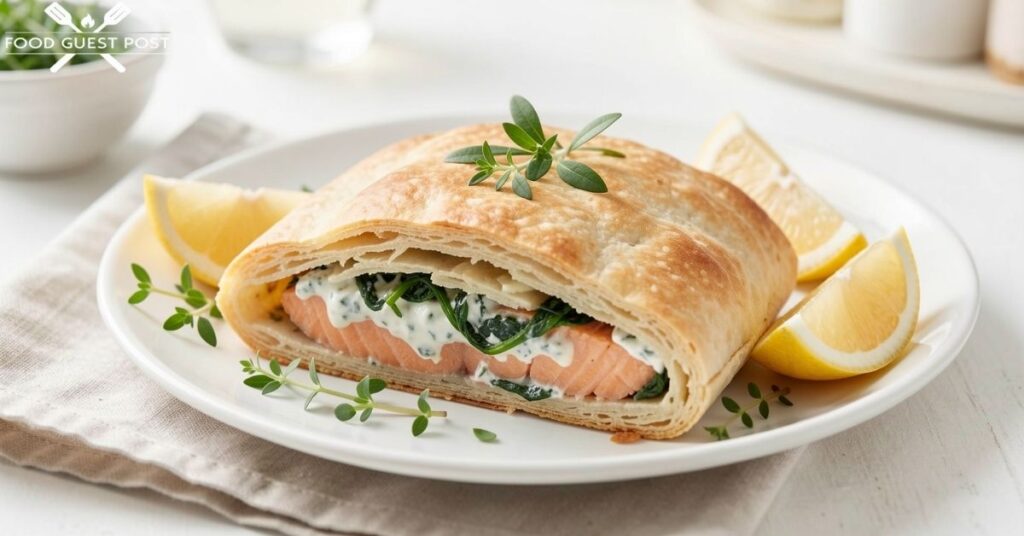
Mary Berry’s version of this classic British salmon recipe stays true to tradition while keeping the process accessible for home cooks. It typically involves a layer of seasoned spinach and cream cheese tucked between two salmon fillets, all snugly wrapped in buttery puff pastry. The result is flaky on the outside, tender on the inside, and rich with flavour in every bite.
This dish has roots in classic French cuisine but has long been adopted into British cooking. Mary Berry, known for her measured and trustworthy approach to baking and cooking, brings a reliable structure to this recipe that takes the guesswork out of it. Her version is precise without being overcomplicated, which is exactly why it’s become a go-to for home cooks across the UK and beyond.
What makes it special is the contrast of textures. The crisp, golden puff pastry gives way to a creamy spinach filling, which then melts into the soft, flaky salmon underneath. It’s a proper gourmet salmon pastry dish that never fails to impress.
Why This Recipe Is Worth Trying
Here’s the honest truth. Most restaurant-style salmon recipes require either professional equipment or a level of technique that takes years to develop. This one doesn’t. The beauty of salmon wrapped in puff pastry is that the pastry does a lot of the heavy lifting for you.
The pastry seals in the heat and steam, which means the salmon cooks gently and evenly without drying out. You don’t need to babysit it on a hob or worry about flipping it at the right moment. You season it, wrap it, and let the oven do the work.
It also looks spectacular on the table. That golden, burnished pastry crust with a slight sheen from the egg wash just commands attention. People see it and assume it’s complicated. It isn’t. But you don’t have to tell them that.
It’s also wonderfully versatile. You can make it for a casual family dinner or dress it up as a holiday salmon main course for Christmas or Easter. It scales easily too. Want to make it for two? Use smaller fillets. Feeding eight? Buy a larger piece of salmon and adjust accordingly.
The flavour combination of baked salmon with spinach filling and cream cheese is genuinely delicious. The spinach adds earthiness, the cream cheese brings creaminess and a slight tang, and the dill adds a fresh, herby lift that pairs naturally with fish. Every element earns its place on that plate.
Essential Ingredients to Make Mary Berry Salmon en Croûte
Getting the ingredients right is half the battle. Here’s what you’ll need and why each one matters.
Two boneless, skinless salmon fillets form the core of this dish. Look for fillets that are roughly the same size and thickness. This matters more than you’d think because uneven fillets lead to uneven cooking. One side dries out while the other stays underdone.
Ready-rolled puff pastry is your best friend here. While making your own pastry from scratch is a lovely project on a lazy weekend, there’s genuinely no shame in using shop-bought. It saves time and delivers consistent results. Make sure it’s fully defrosted if you’re using frozen.
Fresh spinach is preferred over frozen, though frozen works in a pinch. The key with spinach is cooking off all the moisture before it goes anywhere near the pastry. Wet spinach is the number one reason pastry turns soggy at the base. Don’t skip this step.
Cream cheese adds that creamy, tangy richness to the filling. Full-fat works best here. Low-fat versions tend to release more water during baking, which can compromise the pastry texture.
Fresh dill is the herb of choice in this recipe. It has a light, slightly aniseed flavour that pairs beautifully with salmon. If you don’t have dill, you can use chives or flat-leaf parsley, though the flavour profile shifts slightly.
One egg, beaten, is used for the egg wash. This is what gives the pastry that gorgeous golden shine in the oven. Don’t skip it.
A little butter, garlic, salt, and black pepper round out the seasoning. Simple ingredients, properly used, make all the difference.
Handy Kitchen Tools for Best Results
You don’t need a professional kitchen to pull this off. A handful of everyday tools will do the job just fine.
A large baking sheet lined with parchment paper is essential. The parchment stops sticking and makes cleaning up a breeze. A non-stick baking tray works too.
A sharp chef’s knife is important for trimming pastry cleanly. Blunt knives drag and compress the edges, which stops the pastry from rising evenly on the sides.
A rolling pin helps if you need to roll the pastry out slightly. Even if you’re using ready-rolled sheets, a quick roll can help thin and even out the dough.
A pastry brush for applying the egg wash gives you control. Silicone brushes are easy to clean. Natural bristle brushes give a slightly more even coat.
A large frying pan or wok is ideal for wilting the spinach. You need enough room to toss it around.
Finally, a sharp pair of kitchen scissors comes in useful for trimming pastry edges neatly and making any decorative cuts. It’s one of those tools you don’t think about until you need it and then wonder how you ever managed without it.
Step-by-Step Guide to Making Mary Berry Salmon en Croûte
Step 1: Prepare the Spinach Filling
Start by melting a small knob of butter in a wide frying pan over medium heat. Add a minced garlic clove and let it cook for about thirty seconds until fragrant. Then add your fresh spinach in batches, tossing it as it wilts down. This takes about two to three minutes.
Once wilted, tip the spinach into a sieve or colander and press it firmly with the back of a spoon. You want to squeeze out as much moisture as possible. This step is non-negotiable. Even a small amount of residual liquid will make the base pastry soggy during baking.
Let the spinach cool completely before mixing it with the cream cheese and fresh dill. Season generously with salt and pepper. Taste it. It should be well-seasoned because the salmon and pastry are quite neutral and the filling carries a lot of the flavour.
Step 2: Prepare the Salmon
Pat both salmon fillets dry with kitchen paper. Season both sides with a little salt, black pepper, and a squeeze of lemon juice if you like a citrus note. This is where you can also add a pinch of chilli flakes if you enjoy a gentle warmth in the background.
Check the fillets one more time for any pin bones. Run your fingers gently along the flesh. If you feel any, remove them with a pair of kitchen tweezers or the tip of a sharp knife. Leaving bones in is the kind of thing guests notice, and not in a good way.
Step 3: Roll Out the Pastry
Lightly flour a clean work surface and unroll your puff pastry. Cut it into two equal rectangles. One will be the base and the other the top. The base should be slightly larger than your salmon fillet, with a couple of centimetres of border all the way around.
If the pastry feels too thick, give it a gentle roll to thin it slightly. Thicker pastry takes longer to cook through and can leave you with an underdone middle if the salmon has already reached temperature.
Step 4: Wrap the Salmon
Place the base pastry rectangle on your lined baking sheet. Spread the creamy spinach filling in the centre, leaving a border around the edges. Place one salmon fillet on top of the filling, then spoon more filling onto the top of the fillet. Add the second fillet on top, pressing it down gently.
Brush the pastry border with beaten egg. Then lay the second pastry rectangle over the top, pressing the edges firmly together to seal. Crimp the edges with a fork or fold them over in a rope-style press. You want a tight seal to keep all those juices inside during baking.
Step 5: Decorate and Chill
This is where you can have a bit of fun. Use the back of a knife or a sharp tool to score a light diamond or leaf pattern on the top of the pastry. Don’t cut all the way through, just enough to create a decorative pattern that’ll look stunning once baked.
Brush the entire surface with egg wash. For an even deeper golden finish, you can apply a second coat after five minutes.
Then place the whole thing in the fridge, uncovered, for at least twenty to thirty minutes. Chilling the assembled pastry firms it up and helps it hold its shape in the oven. It also gives the gluten in the pastry a chance to relax, which means better puff and less shrinkage.
Step 6: Bake the Salmon en Croûte
Preheat your oven to 200 degrees Celsius (180 fan, Gas Mark 6). This is the ideal salmon en croûte oven temperature for getting that perfect puff without overcooking the fish inside.
Place the chilled pastry on the middle shelf of the oven. Bake for 25 to 30 minutes, or until the pastry is deeply golden and crisp. The salmon en croûte cooking time can vary slightly depending on the thickness of your fillets and your specific oven, so start checking at the 25-minute mark.
You’ll know it’s done when the pastry is properly golden on top and firm when you tap it gently. If you have a meat thermometer, the internal temperature of the salmon should reach around 60 to 63 degrees Celsius for a fully cooked but still moist fillet.
Step 7: Serve and Enjoy
Remove from the oven and let it rest for five minutes before slicing. Resting allows the filling to firm up slightly, which makes for cleaner slices. Use a sharp serrated knife to cut through the pastry without crushing it.
Serve it at the table whole before slicing for maximum visual impact. Then cut thick, generous portions and plate them up with your chosen sides. A wedge of lemon on the side is never a bad idea.
What I Got Wrong (And How I Fixed It)
The first time this was attempted at home, two things went wrong immediately. The spinach wasn’t squeezed dry enough. The result was a waterlogged bottom layer of pastry that was practically raw in the middle. Not ideal. The fix was simple. After squeezing the spinach in a sieve, it was then wrapped in a clean tea towel and twisted firmly over the sink. Problem solved.
The second mistake was skipping the chilling step. Without that rest in the fridge, the butter in the pastry started melting before the oven could set the structure. The pastry spread and lost its layered, flaky quality. After that, chilling became non-negotiable.
There’s also the common mistake of using salmon fillets that are too thick in the middle and thin at the tail end. The uneven thickness means the thin parts cook faster and dry out. Trimming the fillets to an even thickness, or folding the thinner end under, solves this instantly.
Healthier Version of Mary Berry Salmon en Croûte
Salmon is already one of the more nutritious proteins you can cook with. It’s rich in omega-3 fatty acids, high-quality protein, and essential vitamins including B12 and D. So the base of this dish is already doing good work nutritionally.
To lighten it up a little, you can swap the full-fat cream cheese for a reduced-fat version or even a thick Greek yogurt blended with a little soft cheese. The texture changes slightly but it still delivers creaminess without as much saturated fat.
Using one sheet of puff pastry instead of two (by folding it over rather than using a full top sheet) reduces the pastry content meaningfully. You still get the golden crust and flaky texture, but with less overall pastry per serving.
Adding extra vegetables to the filling also boosts the nutritional value. Finely chopped courgette, wilted leeks, or even roasted red peppers work wonderfully alongside the spinach and don’t overwhelm the flavour of the salmon.
Portion size matters too. Serving it with a large green salad or roasted vegetables instead of heavy starches makes for a more balanced plate overall.
Ingredient Substitutions for Mary Berry Salmon en Croûte
Not everyone has every ingredient on hand at all times, and that’s completely fine. This recipe is forgiving when it comes to substitutions.
If you can’t find puff pastry, shortcrust pastry works as a substitute. It won’t puff up the same way, but it gives a crumblier, more biscuit-like crust that some people actually prefer for this type of dish.
Out of cream cheese? Ricotta blended with a little lemon zest and seasoning makes a decent stand-in. Mascarpone works too, though it’s richer and slightly sweeter. Goat’s cheese is another interesting option that adds a tangier, more complex flavour.
Can’t get fresh dill? Fresh chives, tarragon, or flat-leaf parsley all work well with salmon. Tarragon in particular pairs beautifully with cream-based fillings.
Spinach can be replaced with wilted kale, Swiss chard, or even a mixture of wild garlic leaves if they’re in season. The key is always to cook the greens first and remove as much water as possible.
If you’re avoiding gluten, there are good gluten-free puff pastry options available in most supermarkets now. The technique stays exactly the same.
Pairing Ideas: What to Serve With Mary Berry Salmon en Croûte
The dish is rich and filling, so sides that are fresh, light, or slightly acidic work best to balance it out.
New potatoes with butter and fresh herbs are a classic pairing. They soak up any buttery juices from the plate without competing with the salmon for attention. Tender-stem broccoli or fine green beans with a little garlic and lemon are another excellent choice.
A crisp, lightly dressed green salad with watercress, rocket, and cucumber cuts through the richness of the pastry beautifully. Add a simple vinaigrette with wholegrain mustard and you’ve got a perfect counterpoint.
For something a bit more substantial, a warm dill-infused beurre blanc or a simple hollandaise sauce works wonderfully as an accompaniment. It adds an extra layer of indulgence that works well for a dinner party setting.
A dry white wine like a Chablis, Pouilly-Fumé, or a good New Zealand Sauvignon Blanc pairs brilliantly with salmon in puff pastry. The acidity and minerality in the wine cut through the pastry’s butteriness and complement the fish perfectly.
Expert Tips for Perfect Mary Berry Salmon en Croûte
Always use cold pastry. Warm pastry is harder to handle and doesn’t puff as well. If the kitchen is warm, work quickly and get it back in the fridge as soon as the assembly is done.
Season every layer. The spinach filling, the salmon, and even a pinch of flaky sea salt on the egg wash all contribute to the final flavour. Under-seasoned salmon en croûte tastes flat, no matter how well the technique is executed.
Make sure your oven is fully preheated before the pastry goes in. Putting it into a cold or only partially heated oven is a recipe for underdone pastry. Give the oven at least fifteen minutes to reach full temperature.
Don’t skip the egg wash. It’s what gives that deep, glossy, bakery-style finish to the pastry. Without it, the pastry turns pale and dull.
Cut ventilation slits in the top of the pastry before baking. These small cuts allow steam to escape during cooking. Without them, the steam builds up inside and can cause the pastry to burst or become soggy in places. Two or three small slits in the top is enough.
Creative Ways to Customize Mary Berry Salmon en Croûte

Once you’ve made the classic version a couple of times, it’s natural to start experimenting. The beauty of homemade salmon en croûte is how well it takes to variation.
Try adding a smear of sun-dried tomato paste on the salmon before spreading the filling. It adds a subtle umami depth and a hint of sweetness that works surprisingly well with the cream cheese and spinach.
For a more Middle Eastern flavour profile, mix a teaspoon of harissa into the cream cheese filling. The heat and smokiness of the harissa against the richness of the salmon is genuinely exciting.
You can also scatter a handful of toasted pine nuts through the spinach filling for crunch and nuttiness. Or add some finely chopped capers and lemon zest for a brighter, more acidic counterpoint.
Replacing the cream cheese entirely with a blend of ricotta and pesto creates a completely different flavour direction. Herby, green, and vibrant. It still works beautifully inside the pastry.
For a festive twist, wrap individual salmon portions into smaller en croûte parcels and serve one per person at the table. They look elegant and solve the portioning problem at a dinner party.
Storing Mary Berry Salmon en Croûte the Right Way
If you have leftovers, and sometimes you do, storage is simple. Let the salmon en croûte cool completely before covering it. Wrap it tightly in foil or transfer it to an airtight container and store it in the fridge. It’ll keep well for up to two days.
Raw, assembled but unbaked salmon en croûte can be kept in the fridge overnight before baking. This is actually a great make-ahead strategy for entertaining. Assemble it the day before, wrap it loosely in cling film, and refrigerate. The next day, simply apply a fresh coat of egg wash and bake as directed.
Freezing is possible, though the texture of the pastry does suffer slightly after thawing. If you do freeze it, freeze it unbaked and well-wrapped. Defrost overnight in the fridge before applying the egg wash and baking from cold. Add five to ten extra minutes to the baking time to account for the chill.
How to Reheat Salmon en Croûte (If Needed)
Reheating salmon en croûte without ruining it is entirely doable, but the microwave is not your friend here. Microwaving pastry makes it soft and chewy. It loses all that beautiful flakiness that made it worth making in the first place.
The oven is always the best option. Preheat it to 160 to 170 degrees Celsius and place the leftover slices on a baking tray lined with parchment. Cover loosely with foil and warm through for ten to fifteen minutes. Remove the foil for the last five minutes to help the pastry crisp back up slightly.
An air fryer also works well for reheating. Set it to 160 degrees and warm the slices for eight to ten minutes. The circulating hot air re-crisps the pastry nicely without drying out the salmon inside.
Nutritional Breakdown (per serving)
The figures below are approximate and based on a standard serving of one portion from a recipe serving four people.
Calories sit at around 520 to 580 kcal per serving. Protein comes in at approximately 34 to 38 grams, making it a genuinely high-protein main course. Fat is around 30 to 35 grams, a significant portion of which comes from the healthy unsaturated fats in the salmon and the butter in the pastry. Carbohydrates are roughly 28 to 32 grams, primarily from the puff pastry.
It’s worth noting that salmon is one of the richest dietary sources of omega-3 fatty acids, which support heart health, brain function, and inflammation management. This dish, despite being indulgent in character, carries real nutritional value at its core.
Mary Berry Salmon en Croûte
This is the complete recipe card for quick reference.
Ingredients
- 2 boneless, skinless salmon fillets (approximately 150 to 180g each)
- 320g ready-rolled puff pastry (one standard sheet)
- 200g fresh spinach
- 150g full-fat cream cheese
- 1 garlic clove, minced
- 2 tablespoons fresh dill, finely chopped
- 1 tablespoon butter
- 1 egg, beaten (for egg wash)
- Salt and black pepper to taste
- Lemon wedges to serve
Instructions
Preheat your oven to 200 degrees Celsius (180 fan). Line a baking tray with parchment paper.
Melt the butter in a wide pan over medium heat. Add the garlic and cook for thirty seconds. Add the spinach in batches and wilt it down completely. Transfer to a sieve and press out all excess moisture. Allow to cool, then mix with the cream cheese and dill. Season well.
Pat the salmon fillets dry and season both sides. Unroll the puff pastry and cut into two rectangles. Place one rectangle on the lined tray. Spread half the spinach mixture in the centre, leaving a border. Place one salmon fillet on top, add remaining filling, then top with the second fillet.
Brush the border with egg wash. Place the second pastry rectangle on top and seal the edges firmly. Crimp with a fork. Score the surface lightly and brush all over with egg wash. Cut two or three small ventilation slits in the top.
Refrigerate for 20 to 30 minutes.
Bake for 25 to 30 minutes until deeply golden and crisp. Rest for five minutes before slicing and serving.
FAQ’s
Can I make salmon en croûte the day before?
Yes, absolutely. Assemble it, cover it loosely, and keep it in the fridge overnight. Apply a fresh coat of egg wash just before baking. It actually bakes beautifully from cold with a few extra minutes added to the cooking time.
What temperature should salmon en croûte be cooked at?
Bake it at 200 degrees Celsius (180 fan, Gas Mark 6). This temperature gives the pastry enough heat to puff and crisp without overcooking the salmon inside.
Can I use frozen spinach instead of fresh?
Yes, but you need to defrost it fully and then squeeze out every drop of water before using it. Frozen spinach holds a lot of moisture, and wet filling will ruin the pastry base.
How do I know when salmon en croûte is cooked through?
The pastry should be deeply golden and firm to the touch. If you want to be precise, use a meat thermometer. The internal temperature of the salmon should read around 60 to 63 degrees Celsius.
Can I freeze salmon en croûte?
Yes, but freeze it before baking. Wrap it tightly, freeze for up to one month, then thaw overnight in the fridge before applying egg wash and baking. Add an extra five to ten minutes to the baking time.

Logan Reid is a food content strategist passionate about digital storytelling and SEO growth. With years of culinary and marketing experience, he helps food bloggers and brands boost visibility through authentic, data-driven strategies. His work blends creativity, expertise, and trust, making every collaboration a recipe for lasting online success.