
Christmas is one of those times when the kitchen becomes the heart of the home. The smell of something roasting, a pudding steaming away on the hob, pastry cooling on the counter. It’s everything at once, and it can feel overwhelming if you don’t have a clear plan. That’s exactly where Mary Berry’s approach to festive cooking cuts through the noise. Her recipes don’t ask you to be a professional chef. They ask you to care, to prepare, and to enjoy the process.
Whether you’re hosting for the first time or you’ve done it twenty years running, there’s always something new to borrow from her festive repertoire. From elegant canapés to showstopping mains and indulgent desserts, this guide walks you through the very best of what her Christmas cooking has to offer.
Mary Berry Christmas Recipes: Festive Cooking Made Easy
What makes Mary Berry’s approach so beloved isn’t just the recipes themselves. It’s the confidence she gives you. She assumes you’re competent, not clueless. Her instructions are clear without being condescending, and her flavour combinations are bold without being overcomplicated.
Mary Berry Christmas recipes are built on a foundation of tried-and-tested British cooking wisdom, updated with just enough contemporary flair to feel fresh every year. She doesn’t chase trends. She refines classics. And that, frankly, is why people keep coming back to her cookbooks every December.
Her Christmas cooking philosophy is essentially this: plan ahead, use good ingredients, and don’t leave everything to the last minute. Smart advice that most of us learn the hard way at least once.
Mary Berry Christmas Recipes Book
Over the years, Mary has released several books and television specials dedicated entirely to festive cooking. Her Christmas-focused collections typically cover the full spread, from nibbles on Christmas Eve to Boxing Day leftovers. The recipes are organised by course and occasion, which makes meal planning genuinely straightforward rather than a guessing game.
What sets her books apart is the make-ahead guidance she includes throughout. She tells you what can be prepared a week in advance, what can be frozen, and what needs to be done on the day. That kind of practical structure is exactly what you need when you’re juggling multiple dishes, entertaining guests, and trying to actually enjoy the holiday yourself.
Her festive collections also carry a warm, personal tone. You get the sense that she’s cooked every dish herself, refined it over multiple attempts, and only shared it once she was satisfied. That trustworthiness is hard to fake, and readers notice it.
Read More: Homemade Mary Berry Marmalade Recipe – Easy & Zesty Citrus Preserve
Christmas Starters and Canapés
The starter sets the tone. Arrive at the table with something genuinely delicious, and your guests will relax. They’ll trust the rest of the meal. Get it wrong and there’s a slightly anxious energy that follows everyone into the main course.
Mary Berry’s Christmas starters and canapés land beautifully because they balance elegance with practicality. Most can be prepared ahead of time. Many require no last-minute cooking at all. That’s not a coincidence. It’s deliberate design from someone who understands the chaos of Christmas hosting.
Her holiday party appetisers span a wide range of styles, from rich cheese-based bites to lighter fish-forward options. There’s always something for every guest at the table, including those who don’t eat meat. The key is variety, and she delivers it.
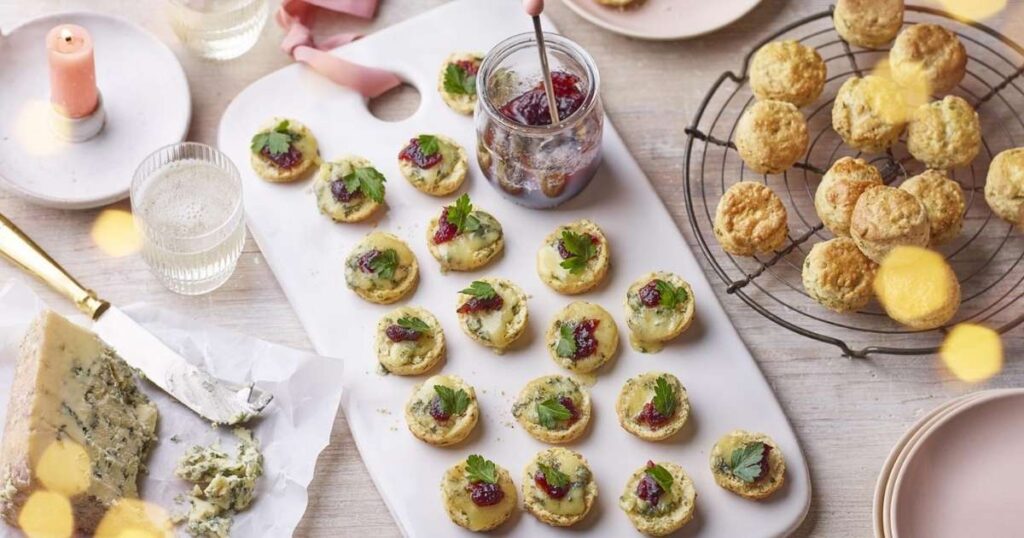
Dolcelatte and Sage Scone Canapés
These are the kind of canapé that people quietly eat three of before they realise what they’ve done. Small, savoury scones topped with creamy dolcelatte and a crisp fried sage leaf. Warm, rich, and just sophisticated enough to feel special without being fussy.
The scone base itself is made with self-raising flour, butter, and a splash of milk, which makes it approachable for any skill level. The dolcelatte adds a punchy, creamy contrast, and the sage brings that earthy, festive note that works so well in winter cooking. You can bake the scones a day ahead and simply assemble them on the day.
They work beautifully as part of a wider canapé spread, and they disappear fast. If you’re making them for a larger gathering, double the batch. You’ll be glad you did.
Chestnut, Cranberry, and Brie Parcels
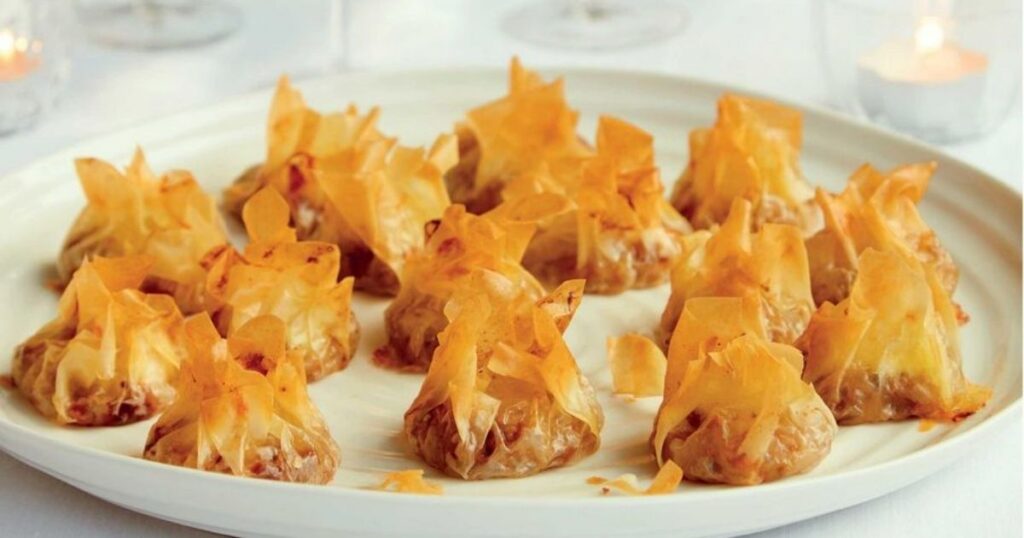
These little parcels are genuinely show-stopping for something so simple to make. Filo pastry wraps around a filling of sweet chestnut, tangy cranberry, and melting brie, then bakes until golden and crisp. The combination of flavours is deeply festive without being clichéd.
What makes them particularly useful on Christmas Day is that you can assemble them fully in advance and keep them in the fridge until you’re ready to bake. No panicked last-minute assembly while trying to manage everything else. Just pop them in the oven twenty minutes before you want to serve them.
The texture contrast here is what makes them so satisfying. The crunch of filo against the molten, creamy filling is exactly the kind of thing guests remember. These also work well as a vegetarian Christmas starter for those not eating meat, which is always worth thinking about ahead of time.
Fish Platters and Smoked Fish Starters
Smoked fish is one of the most underused Christmas starter options in British home cooking. It’s elegant, requires almost no cooking, and pairs beautifully with sharp, acidic condiments like capers, pickled cucumber, and horseradish cream.
Mary Berry leans into this tradition with several fish-based starter ideas. A well-assembled smoked fish platter, for instance, can serve as both a starter and a centrepiece. Arrange smoked salmon, gravadlax, and smoked mackerel on a board with blinis, lemon wedges, and dill crème fraîche, and you have something genuinely impressive that took you about fifteen minutes to put together.
For a more structured starter, a small portion of smoked fish pâté served with melba toast and a dressed salad is classic, refined, and universally liked. It also keeps well in the fridge, making it a practical choice for the busy Christmas period.
Rustic Smoked Trout and Anchovy Pâté
This is one of those recipes that tastes far more complex than it is to make. Smoked trout and anchovy pâté has a depth of flavour that comes from the combination of oily, smoky fish with the salty intensity of anchovies. It sounds bold, but the result is remarkably balanced and deeply savoury.
To make it, blend smoked trout fillets with a couple of anchovy fillets, cream cheese, a squeeze of lemon juice, and a little fresh dill. Blitz until smooth, taste for seasoning, and chill until needed. It keeps well in the fridge for three to four days, which makes it an ideal make-ahead option for the festive period.
Serve it with thin toast, oatcakes, or cucumber slices for a lighter option. A scattering of capers on top adds a pleasant briny contrast. It’s the kind of starter that feels effortlessly grown-up without demanding hours in the kitchen.
Show-Stopping Christmas Mains
The main course is where Christmas cooking ambitions tend to get loftiest and most stressful. Mary Berry’s approach here is characteristically reassuring. Yes, the mains she suggests are impressive. But they’re also achievable. She chooses recipes where the technique is sound and the results are reliable, even if you haven’t cooked them before.
Her Christmas dinner ideas span beyond the standard roast turkey. While she certainly covers turkey beautifully, she also offers alternatives for smaller gatherings, different dietary preferences, and hosts who simply want to try something different. Roast chicken, glazed ham, beef fillet, and wellington variations all feature in her festive repertoire.
The best advice for Christmas mains? Read the recipe fully at least two days before. Understand what can be done in advance. And trust the process. Mary’s recipes are tested, and they work.
Roast Chicken with Tarragon Butter and Melting Onions
Not everyone is cooking for twenty. For smaller gatherings, a beautifully roasted chicken can be every bit as celebratory as a full turkey. Mary Berry’s version with tarragon butter and melting onions is one of the finest expressions of this idea.
The tarragon butter is pushed under the skin of the chicken before roasting, which keeps the breast meat incredibly moist and infuses the whole bird with a fragrant, anise-like warmth. The onions are halved and placed beneath the chicken as it roasts, slowly caramelising in the juices that drip down. By the time the chicken is done, those onions are soft, golden, and extraordinary.
This is a recipe that rewards simplicity. Good chicken, quality butter, fresh tarragon, and a hot oven. The result is a roast that feels genuinely luxurious without asking too much of you. It’s also a wonderful choice if you’re hosting four to six people and want something that won’t have you standing at the counter for three hours.
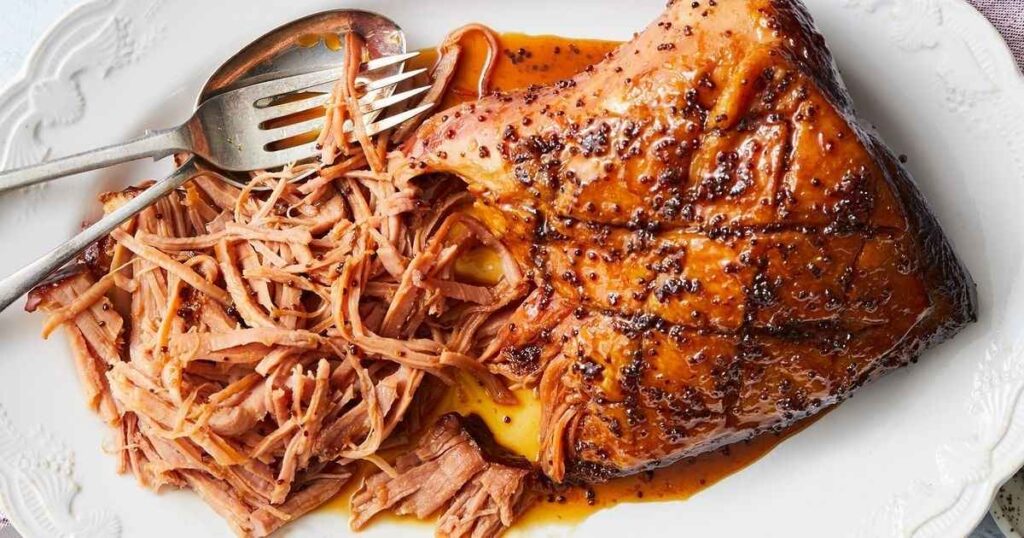
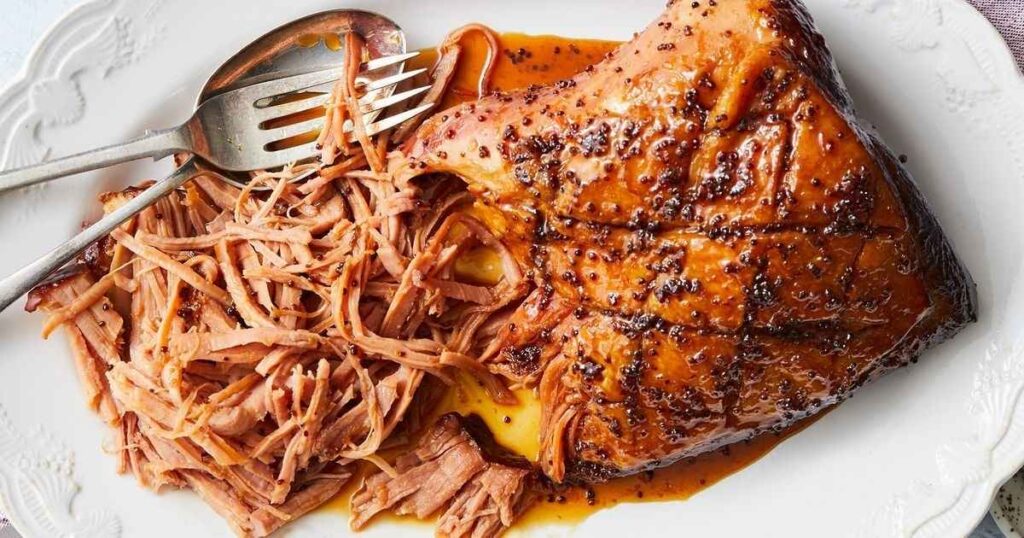
Orange-Glazed Ham with Mango and Orange Salsa
A glazed ham is one of the most versatile things you can cook at Christmas. It feeds a crowd, it tastes as good cold as it does warm, and it looks spectacular on the table. Mary Berry’s orange-glazed version takes the classic formula and lifts it with a vibrant tropical salsa that cuts right through the richness.
The ham is simmered first to cook through gently, then scored and glazed with a sticky mixture of marmalade, orange juice, and a touch of mustard before going into a hot oven to caramelise. The skin crisps and bronzes beautifully. The mango and orange salsa alongside it is fresh, bright, and almost surprising alongside something so traditionally British.
This pairing is a good example of Mary’s ability to modernise without abandoning what works. The ham is deeply traditional. The salsa is anything but. Together, they create a centrepiece that feels current and celebratory.
Roasted Fillet of Beef with Horseradish Sauce
If you want to serve something genuinely impressive without the complexity of a wellington, a roasted beef fillet is your answer. It’s one of the more forgiving cuts of beef when cooked properly, and Mary Berry’s version with a robust horseradish sauce is a Christmas dinner that guests will talk about long after the plates are cleared.
The key to a perfect beef fillet is heat management. A very hot oven for a short time produces a beautifully browned crust with a tender, blush-pink interior. Resting the meat properly after cooking is non-negotiable. At least fifteen minutes under foil allows the juices to redistribute and keeps every slice juicy rather than running onto the board.
The horseradish sauce is made with freshly grated horseradish if you can get it, stirred through crème fraîche with a little white wine vinegar and seasoning. It’s sharp, creamy, and a genuinely perfect partner to the richness of the beef.
Beef Wellington and Roasted Vegetable Wellington
The beef wellington is perhaps the most theatrical of all Christmas mains. Tender beef fillet wrapped in mushroom duxelles and golden puff pastry, sliced at the table to reveal the perfect pink interior. It never fails to impress, and it’s more manageable than its reputation suggests.
Mary Berry’s version follows the classic construction carefully. The beef is seared hard on all sides first to develop flavour and create a barrier against the pastry. The mushroom duxelles is cooked down until almost dry, which prevents the pastry from going soggy. The whole assembly can be refrigerated overnight and baked the next day, which is genuinely useful on Christmas morning.
For guests who don’t eat meat, a roasted vegetable wellington is a worthy alternative. Roasted root vegetables, spinach, and goat’s cheese wrapped in the same golden pastry make for a visually identical dish that holds its own on the plate. No one at the table should feel like an afterthought, and this ensures they won’t.
Festive Sides: Roast Potatoes, Sweet Potatoes, and Parsnips
Here’s the truth most people won’t say aloud: for a lot of Christmas dinner guests, the sides matter as much as the main. Sometimes more. The roast potatoes, in particular, are non-negotiable. Get them right and the whole meal lands.
Mary Berry’s approach to perfect roast potatoes starts with the right variety, a floury potato like Maris Piper, parboiled until the edges are fluffy, then shaken in the pan to rough up the surface. The fat needs to be smoking hot before the potatoes go in. Goose fat is the traditional choice, but a good quality vegetable oil works well too. The result is a potato with a genuinely shattering crust and a soft, steaming interior.
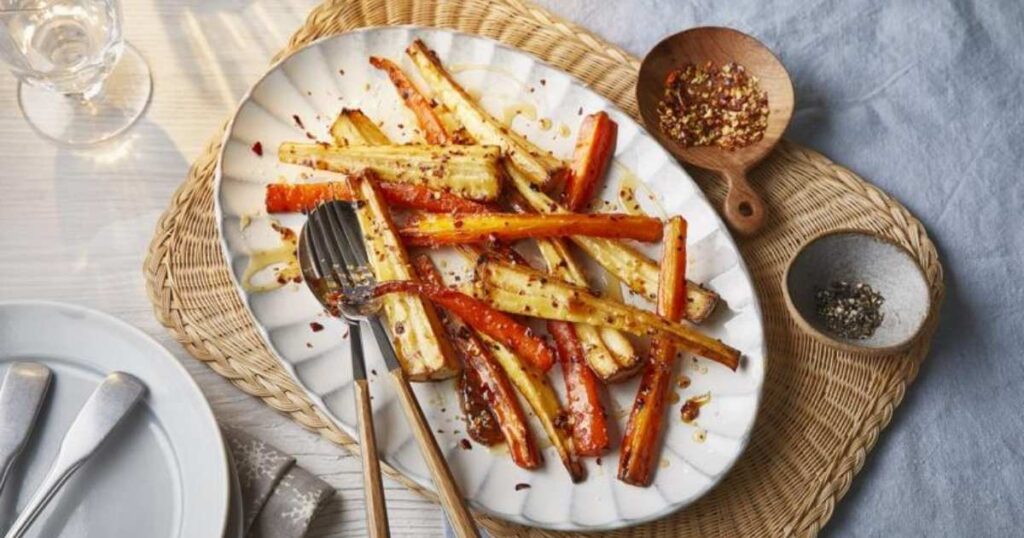
Roasted sweet potatoes with a maple and thyme glaze offer a gentler, sweeter counterpart on the plate. Honey-roasted parsnips, meanwhile, are one of those sides that look after themselves. Toss them in oil and honey, season well, and roast until caramelised at the edges. They’re simple festive side dishes that consistently earn praise far out of proportion to the effort involved.
Cabbage, Gratin, and Other Christmas Vegetable Sides
The vegetable sides at Christmas often get treated as an afterthought. They shouldn’t be. A properly cooked cabbage dish or a rich, bubbling gratin can be genuinely exciting on the Christmas table.
Mary Berry’s approach to festive vegetables is to treat them with the same care as the main attraction. Braised red cabbage with apple and cinnamon is a classic that benefits enormously from being made a day or two in advance. The flavours deepen considerably, and reheating it actually improves the texture. It’s one of those rare cases where procrastination is genuinely the right strategy.
A dauphinoise-style potato gratin, thin-sliced potatoes layered with cream, garlic, and gruyère before baking slowly until golden and set, is a luxurious addition to the Christmas table. It’s rich, warming, and absolutely beloved by everyone who encounters it. Brussels sprouts, prepared properly with lardons and a scatter of chestnuts, are another essential. The key is not overcooking them. They should retain a little bite, not collapse into something grey and apologetic.
Christmas Desserts: Pavlova, Roulade, and Puddings
The dessert course at Christmas is where creativity really gets to stretch. Mary Berry has built an extraordinary catalogue of festive puddings, from the deeply traditional to the delightfully contemporary.
Her pavlova wreath recipe is one of the most visually striking things you can put on a Christmas table. A ring of meringue, crisp on the outside and marshmallow-soft within, piled with cream and dressed with winter fruit and pomegranate seeds. It’s showstopping in appearance and joyful in flavour. The fact that the meringue can be made days in advance makes it a practical choice too.
A festive chocolate and hazelnut roulade brings warmth and richness to the dessert course. The sponge is flourless, which gives it an almost mousse-like texture that collapses into the cream filling with each slice. The hazelnut adds a toasty depth that feels entirely appropriate for the season. It’s one of those Christmas desserts everyone will love, regardless of how full they already are.
For those who want to offer something alongside the traditional Christmas pudding, an easy Christmas apricot trifle is a brilliant option. Layers of sponge, apricot compote, custard, and cream, assembled in a glass bowl so every layer is visible. It’s generous, cheerful, and requires no cooking on the day itself.
Traditional and Modern Christmas Bakes: Cakes, Mince Pies, and Yule Logs
No festive season feels complete without the bakes. The Christmas cake, the mince pies, the yule log. These are the things that fill the house with warmth and make people feel like Christmas has actually arrived.
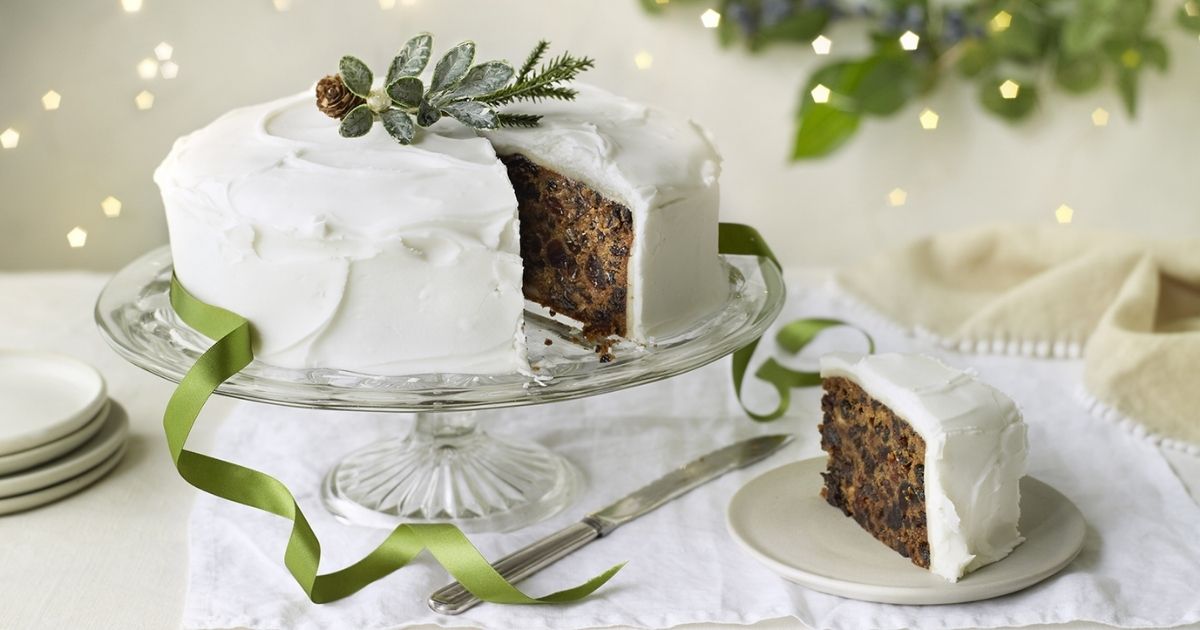
Mary Berry’s traditional Christmas cake is the gold standard for many British bakers. A deeply fruited, richly spiced cake fed with brandy over several weeks, then marzipanned and iced with royal icing. It takes time, but the result is something that genuinely improves with keeping. She recommends making it in late October or early November, which gives the flavours time to develop fully.
Her mince pies recipe produces a short, buttery pastry that shatters pleasingly when you bite into it. The mincemeat inside is warm with spice and sweet with fruit. You can use shop-bought mincemeat if you’re short on time, and she says so openly. There’s no snobbery in her approach, just a clear focus on a good result.
The yule log, a classic bûche de Noël, is made from a thin chocolate sponge rolled around a whipped chocolate ganache filling, then covered in more ganache and dragged with a fork to suggest bark. It’s one of the most satisfying things to make and present at Christmas, and it freezes beautifully if you want to get ahead.
For a modern twist, holiday bakes and pastries like spiced shortbread stars, cranberry and white chocolate cookies, and orange and almond biscuits round out the festive baking repertoire without demanding much time. They’re quick, crowd-pleasing, and wonderful for gifting.
FAQ’s
What are Mary Berry’s most popular Christmas recipes?
Her most celebrated festive dishes include the traditional Christmas cake, glazed ham, pavlova wreath, mince pies, and roast chicken with tarragon butter. These appear consistently across her books and television appearances.
Can Mary Berry’s Christmas recipes be made ahead of time?
Yes, most of them are specifically designed with make-ahead steps. The Christmas cake, braised red cabbage, pâté, and meringue can all be prepared days in advance, which makes Christmas Day itself far more manageable.
Does Mary Berry include vegetarian Christmas options?
She does. Her roasted vegetable wellington and chestnut, cranberry, and brie parcels are both vegetarian-friendly options that hold their own alongside the meat-based dishes.
How do I make Mary Berry’s Christmas pudding?
Her step-by-step Christmas pudding recipe typically involves mixing dried fruit, suet, breadcrumbs, eggs, and spices before steaming for several hours. It can be made weeks ahead and reheated on Christmas Day.
What’s a good beginner Christmas recipe from Mary Berry?
The smoked trout and anchovy pâté, honey-roasted parsnips, or the chocolate hazelnut roulade are all excellent starting points. They’re straightforward, forgiving, and reliably impressive for any level of cook.

Logan Reid is a food content strategist passionate about digital storytelling and SEO growth. With years of culinary and marketing experience, he helps food bloggers and brands boost visibility through authentic, data-driven strategies. His work blends creativity, expertise, and trust, making every collaboration a recipe for lasting online success.