

Have you ever pulled a tray of Mary Berry Yorkshire pudding out of the oven, only to watch them collapse right before your eyes? It’s gutting. You followed what felt like the right steps, the kitchen smelled amazing, and then flat. Sad. Dense little pucks instead of those glorious, golden, puffed-up cups you were dreaming of.
Here’s the thing. Yorkshire pudding isn’t complicated. But it is unforgiving if you skip the small details. The good news? Once you understand what’s actually happening inside that hot oven, you’ll never get it wrong again. This guide walks you through a tried-and-true Mary Berry Yorkshire pudding approach, built for four people, and loaded with the kind of practical insight that makes the difference between a rise and a collapse.
Mary Berry Yorkshire Pudding Recipe for 4 People
This recipe serves four people comfortably, giving you four large puddings or up to eight smaller ones depending on your tin. It uses a simple three-ingredient batter that’s been a staple of British Sunday roast culture for generations.
Here’s what you’re working with:
- 2 large eggs
- 100ml whole milk (or a half-milk, half-water blend for extra lightness)
- 100g plain flour
- A generous pinch of fine salt
- Sunflower oil or beef dripping for the tins
The batter comes together in minutes. The magic, however, is in the technique. And that’s where most people quietly go wrong.
Read More: Apple Cake Recipe Ever By Mary Berry: The Only One You’ll Ever Need
Who Is Mary Berry and Why Her Recipe Works
Mary Berry is one of Britain’s most beloved baking authorities. Decades of television appearances, including her iconic role on the Great British Bake Off, have made her a household name not just in the UK but across the world. She’s not flashy. She’s not trendy. What she is, is reliably right.
Her approach to traditional British Yorkshire pudding is grounded in the same principle that defines all of her cooking: keep it simple, get the basics exactly right, and don’t over-complicate what doesn’t need complicating. She doesn’t chase novelty. She respects technique.
That’s precisely why her method works so well. It doesn’t rely on obscure gadgets or hard-to-find ingredients. It relies on understanding the why behind each step. And when you understand the why, you can troubleshoot on the fly, adapt when needed, and consistently produce results that look and taste like they came from a proper British kitchen.
What Makes Traditional Yorkshire Pudding So Special
Yorkshire pudding originated in Northern England, specifically in the county that gives it its name. Its roots stretch back to the 18th century, when thrifty cooks would pour a simple savory batter beneath a roasting joint of beef, letting the dripping fat cook it into something extraordinary. It was practical. Filling. And astonishingly delicious.
What sets a proper homemade Yorkshire pudding apart from anything you’ll find in a supermarket freezer aisle is texture. A good pudding has crispy, deep-golden sides that practically shatter when you bite into them. The inside is soft and slightly custardy, almost eggy in the best possible way. And the hollow center? That’s not a flaw. That’s the whole point. It’s a natural vessel for rich gravy, which is exactly where it belongs.
There’s also something deeply cultural about it. Yorkshire pudding isn’t just a classic Sunday roast side dish. It’s part of a ritual. Sunday roast isn’t Sunday roast without it. Generations of British families have gathered around tables with these golden puffed puddings at the center, and that history makes every batch feel meaningful.
Why This Recipe Is Perfect for a Sunday Roast
Timing is everything on a Sunday roast. You’ve got the beef resting, the roast potatoes crisping, the gravy simmering, and a dozen other things competing for oven space and your attention. The last thing you need is a high-maintenance side dish.
This recipe fits seamlessly into that chaos. The batter can be made hours in advance, or even the night before. It needs no special attention once it’s in the oven. And it bakes at a temperature that plays nicely with the rest of your roast dinner setup.
More than that, Yorkshire pudding genuinely completes the plate. It absorbs gravy like nothing else can. It adds a savory, almost nutty depth to each bite. And visually, a tray of tall, golden-sided puddings makes the whole meal feel celebratory. It turns a good Sunday roast into a great one.
Ingredients You Need (Simple 3-Ingredient Batter Formula)
Let’s be clear about something. The best Yorkshire pudding batter is made from three things: eggs, flour, and milk. That’s it. No baking powder. No raising agents. No tricks hiding inside the recipe. The rise comes entirely from heat, steam, and the proteins in the eggs.
Here’s the classic ratio for four servings:
- 2 large free-range eggs
- 100g plain flour, sifted
- 100ml whole milk (or 50ml milk plus 50ml cold water for a lighter result)
- Fine sea salt to season
For the tins, you’ll want a small amount of oil in each cup. Sunflower oil is the most accessible choice. If you can get beef dripping, use it. The flavor it adds is subtle but unmistakably authentic. It connects every bite back to that original 18th-century method of cooking batter beneath a roasting joint.
Use plain flour, not self-raising. Self-raising flour contains a leavening agent that can interfere with how the batter behaves at high heat, and the result is often a pudding that rises quickly but doesn’t hold. Plain flour creates a more stable structure. That structure is what keeps your puddings tall long after they leave the oven.
Best Kitchen Tools for Perfect Rise
You don’t need much. But what you do use matters.
A proper Yorkshire pudding muffin tin method is one of the most reliable routes to consistent results. A four-hole Yorkshire pudding tin gives you large, restaurant-style puddings with tall sides. A 12-hole muffin tin gives you smaller ones, which is great if you want more per person or prefer a crispier-to-soft ratio. Both work brilliantly as long as the technique is right.
A large jug or mixing bowl with a pour spout makes life easier. You’ll be pouring batter into a very hot tin, and anything that helps you do that quickly and without spillage is your friend. Silicone oven gloves are also worth having. Speed matters when you’re working with smoking-hot oil.
A metal tin conducts heat better than ceramic or glass. Always choose metal for this recipe. It heats faster, it distributes heat more evenly, and it gives the bottom of your puddings that satisfying crunch that makes the first bite so deeply rewarding.
The Secret Ratio for Light and Airy Yorkshire Puddings
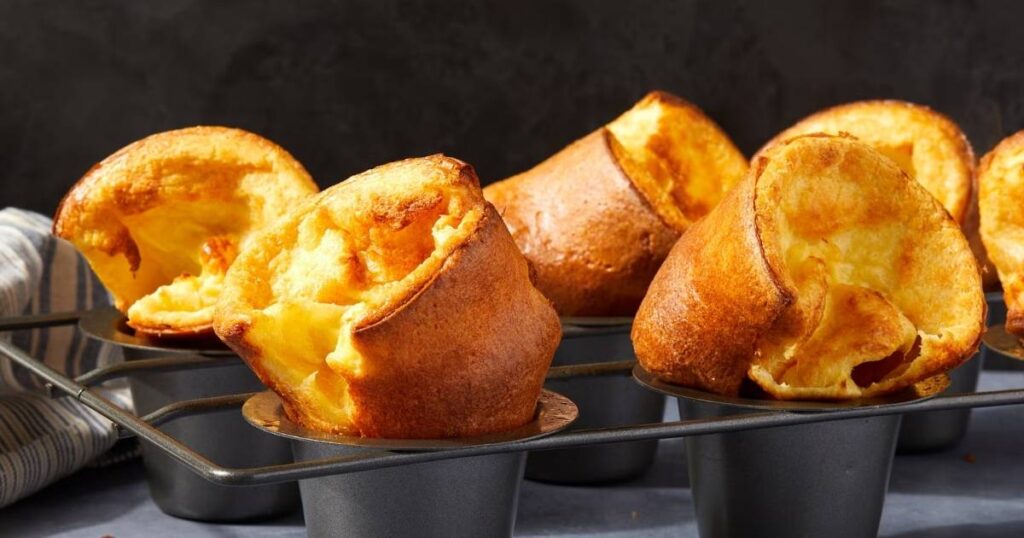
Ask ten British home cooks for their pudding ratio and you’ll get ten different answers. But the one that consistently delivers light and airy results is the equal-weight method: equal parts egg, flour, and liquid by weight.
For four people, that means roughly two eggs (which weigh around 100g out of the shell), 100g of plain flour, and 100ml of liquid. This creates a batter that’s fluid enough to puff dramatically in the oven but thick enough to hold its shape once it gets there.
The Yorkshire pudding batter ratio is not something to eyeball casually. Too much flour makes the pudding dense and bready. Too little makes it fragile and prone to collapsing. Too much liquid and it won’t hold any structure at all. Get the ratio right and everything else becomes far more manageable.
Some bakers swear by replacing half the milk with water. The water produces more steam in the initial heat blast, which drives a faster and more dramatic rise. The milk adds richness. Together, they create a pudding that’s light, airy, and still satisfying.
Step-by-Step Instructions for Foolproof Results
Start by making your batter at least 30 minutes before you plan to bake, ideally longer. Sift the flour and salt into a mixing bowl. Make a well in the center. Crack in both eggs and whisk from the center outward, gradually drawing in the flour as you go. Once the mixture becomes thick and smooth, slowly add the milk, whisking continuously. You want a batter that’s the consistency of single cream. Smooth, fluid, and lump-free. Rest it, covered, at room temperature.
When you’re ready to bake, preheat your oven to 220°C (200°C fan). This is non-negotiable. Baking Yorkshire pudding at 220°C creates the intense initial heat that drives the rise. Place your tin inside the oven with a small amount of oil in each cup. You want the oil to get genuinely smoking hot. This takes about ten minutes in a properly preheated oven.
Pull the tin out carefully and immediately pour the batter. Fill each cup roughly halfway. No more. The hot oil Yorkshire pudding method depends on the batter hitting that searing heat and beginning to cook the moment it makes contact. Then return the tin to the oven fast and close the door.
Bake for 20 to 25 minutes without opening the oven door. Not even a peek. Opening the door drops the temperature and kills the rise. When the puddings are deep golden, fully puffed, and crispy-sided, they’re done.
Common Mistakes That Make Yorkshire Puddings Sink
The most common reason Yorkshire puddings collapse is cold oil. If the oil isn’t properly smoking hot when the batter goes in, the rise is already compromised. The batter needs to begin cooking instantly. Lukewarm oil just lets it sit there and stew.
Opening the oven door is the next most frequent error. It feels harmless. It isn’t. Steam is what keeps the pudding rising during those first critical minutes, and every time you open that door, you’re releasing the steam and dropping the temperature.
Overfilling the cups is another one. It seems logical to fill them up for bigger puddings. But too much batter and the center can’t cook through before the outside overcooks. Halfway is the right amount.
Cold batter straight from the fridge also causes problems. If the batter is cold when it hits the hot oil, it struggles to create that instant steam burst. Room temperature batter works far better. This is one of those small details that separates consistently good puddings from unpredictable ones.
Finally, not resting the batter. Why is resting the batter important? Because it allows the gluten in the flour to relax. Relaxed gluten creates a more tender, elastic batter that puffs and holds more easily than a freshly mixed, tight batter would.
Pro Tips for Extra Crispy and Tall Puddings
If you want puddings with serious height and those satisfying crispy sides, here are a few things that actually make a difference.
Use a metal four-hole tin rather than a flat roasting tray. The deeper individual cups concentrate the heat upward and force the batter to rise in a specific direction. It’s the Yorkshire pudding muffin tin method taken seriously.
Beef dripping instead of sunflower oil gives the bottom of the pudding an extra layer of flavor and crispiness. The fat has a higher smoke point and renders into the batter in a way that adds genuine depth. It’s the most authentic fat for this recipe and the one most serious Yorkshire pudding cooks reach for.
Let your batter rest overnight if you can. An overnight rest in the fridge allows even more gluten relaxation and, according to many experienced bakers, produces a noticeably lighter pudding. Bring it back to room temperature for 30 minutes before using.
And don’t rush the oil-heating step. Ten minutes feels like a long time when you’re standing there watching the oven. But that smoking-hot oil is the entire foundation of everything that happens next. It’s not optional.
Healthier Ingredient Swaps Without Losing Flavor
Yorkshire pudding is not a health food. It was never meant to be. But if you want to make it slightly lighter without stripping out everything that makes it good, there are sensible swaps available.
Replacing whole milk with semi-skimmed reduces the fat content modestly without dramatically affecting the texture. The pudding will still rise well. It might be very slightly less rich, but most people at the table won’t notice.
Using sunflower oil instead of beef dripping reduces saturated fat. It’s a cleaner-tasting pudding but still perfectly crispy and satisfying. This swap is also important for anyone avoiding meat-based products, whether for dietary or ethical reasons.
Reducing the salt slightly is always an option if you’re watching sodium intake. The eggs and flour carry enough flavor that the pudding won’t taste flat with a modest reduction.
What you can’t really swap is the eggs. They are the structural backbone of this batter. Without them, nothing rises, nothing holds, and nothing tastes the way it should.
Ingredient Substitutions (Dairy-Free, Gluten-Free & More)
Can you make gluten-free Yorkshire pudding? Yes. Replace the plain flour with a good-quality gluten-free plain flour blend. The texture won’t be quite identical but with the right blend and proper technique, you can get surprisingly close. The key is using a blend that includes xanthan gum for structure, since gluten normally provides that.
For a dairy-free version, oat milk or unsweetened almond milk both work reasonably well. Oat milk is the closer match in terms of richness and the results it produces. Avoid anything thin and watery. The batter needs some body to rise properly.
What milk works best for Yorkshire pudding batter in the standard recipe? Whole milk, always. The fat content matters for both texture and flavor. But as covered above, half milk and half water is a legitimate technique used by many experienced bakers specifically to increase the rise.
Can you use olive oil instead of beef dripping? Technically yes. The pudding will cook fine. But olive oil has a lower smoke point and a more pronounced flavor that isn’t entirely neutral in a savory batter. Sunflower or vegetable oil is a better everyday substitute.
What to Serve with Yorkshire Pudding (Best Pairings)
Yorkshire pudding was born alongside roast beef. That relationship is deep, historical, and completely justified. The rich, slightly gamey depth of a proper roast beef dinner is the perfect foil for a light, airy pudding. And when you pour hot, beefy gravy into that hollow center, everything makes sense.
But it doesn’t stop there. Roast lamb works beautifully. Roast chicken with a herb gravy is another classic pairing. Even a thick, well-seasoned vegetable broth poured over a hot pudding can be surprisingly satisfying for non-meat eaters.
Yorkshire pudding also goes well with braised red cabbage, crispy roast potatoes, honey-glazed carrots, and a proper English mustard on the side. Roast dinner essentials, all of them.
Some people even serve smaller puddings filled with sausages as a twist on the classic “toad in the hole.” That’s not far from the original spirit of the dish at all.
Creative Ways to Customize Yorkshire Puddings

The classic version is hard to beat. But if you want to experiment a little, there’s room to play.
A teaspoon of fresh thyme or rosemary stirred into the batter before pouring adds a herbal note that pairs especially well with lamb. A small amount of finely grated Parmesan mixed into the batter creates a slightly richer, nuttier flavor. Horseradish cream served inside a freshly baked pudding, topped with wafer-thin slices of rare beef, is a proper crowd-pleaser at dinner parties.
Smaller puddings can be filled with pulled pork and apple sauce for something completely different. Or with a soft-boiled egg and wilted spinach for a brunch variation that genuinely works.
The batter itself is a blank canvas. Savory batter pudding has been adapted across British food culture for centuries. There’s no reason yours has to look exactly like everyone else’s.
How to Store Yorkshire Pudding Properly
Once your puddings are fully cooled, store them in an airtight container at room temperature for up to two days, or in the fridge for up to four days. They’ll lose some crispiness in storage, but a few minutes in a hot oven brings most of it back.
Can you freeze Yorkshire puddings? Absolutely. Let them cool completely, then freeze in a single layer before transferring to a freezer bag. They’ll keep well for up to three months. This is a genuinely useful trick if you’re cooking for a large group and want to prepare some ahead of time.
Make-ahead Yorkshire pudding batter is also a practical strategy. The batter stores in the fridge for up to 24 hours and arguably improves overnight. Just give it a good stir or whisk before using and bring it to room temperature first.
The Best Way to Reheat Without Making Them Soggy
The oven is the only correct way to reheat a Yorkshire pudding. Place them directly on the oven rack at 200°C for around five minutes. No foil. No covering. You want circulating hot air to re-crisp those sides and warm the inside without steaming them back into softness.
The microwave will make them soggy. It’s fast, yes, but the result is a limp, pale version of what they should be. It doesn’t bring back the crispy Yorkshire pudding experience at all.
An air fryer is actually quite effective if you have one. Three to four minutes at 180°C and they come out remarkably close to freshly baked. Better than the oven in some cases, because the circulating air is even more intense.
Nutritional Information Per Serving
Each large Yorkshire pudding made with this recipe contains approximately:
- Calories: 165-180 kcal
- Protein: 6-7g
- Carbohydrates: 20-22g
- Fat: 6-8g (depending on oil used)
- Saturated fat: 1-2g (with sunflower oil)
- Fiber: 0.7g
- Sodium: 150-180mg
These figures are estimates based on the four-serving recipe using sunflower oil and whole milk. Using beef dripping will increase the saturated fat modestly. Using semi-skimmed milk will slightly reduce the overall calorie count. Is Yorkshire pudding healthy? It’s not a nutritional powerhouse, but it’s also not an indulgence to feel guilty about, especially as part of a balanced meal eaten occasionally.
FAQ’s
Why don’t my Yorkshire puddings rise?
The most common cause is oil that isn’t hot enough when the batter hits the tin. Make sure it’s genuinely smoking before you pour.
Can you refrigerate Yorkshire pudding batter overnight?
Yes, and many bakers prefer it. An overnight rest relaxes the gluten and often produces a lighter, more consistent rise.
Why does opening the oven door ruin the rise?
It drops the internal temperature and releases the steam that’s driving the puff. Keep the door closed for the full bake.
Can I use self-raising flour instead of plain flour?
It’s not recommended. Self-raising flour contains a leavening agent that affects how the batter behaves under high heat, often leading to an unstable rise.
How do you make Yorkshire pudding crispy?
Smoking-hot oil, a preheated metal tin, batter at room temperature, and not opening the oven door. Get those four things right and crispy sides are virtually guaranteed.

Logan Reid is a food content strategist passionate about digital storytelling and SEO growth. With years of culinary and marketing experience, he helps food bloggers and brands boost visibility through authentic, data-driven strategies. His work blends creativity, expertise, and trust, making every collaboration a recipe for lasting online success.